Showing posts with label arachnid. Show all posts

Sep 13, 2021

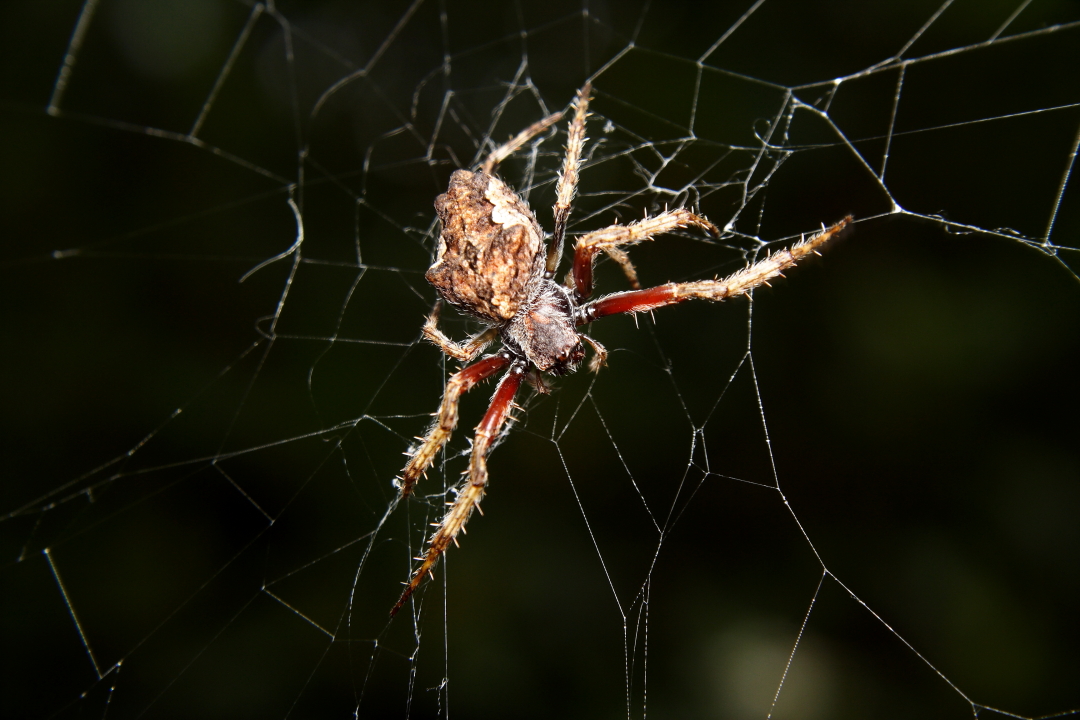
Juvenile Orb Weaver Spider

Well, it's Spring time and the spiders are begining to come out. This Orb weaver was resting in the sun on the leaf of a plum tree.

1/640 - f/5.6 - ISO200 - 135mm macro


Aug 8, 2021

Wolf Spider - Lycosa furcillata


Another shot of a Wolf Spider(Lycosa furcillata), hiding amongst the blades of grass in late winter.

The Wolf spider (Lycosidae) is a fascinating and relatively common arachnid species found throughout Australia. Known for their speed, agility, and fierce hunting abilities, these spiders are considered beneficial to the ecosystem as they help control insect populations.

The Wolf spider derives its name from its hunting strategy, which closely resembles that of a wolf. Rather than creating intricate webs to catch their prey, they rely on their excellent vision and agility to actively hunt and pounce on their victims. Armed with eight long and hairy legs, they can quickly sprint across a variety of terrains, including forest floors, grasslands, and even sandy deserts.

One distinguishing characteristic of the Wolf spider is its unique eye arrangement. They possess eight eyes arranged in three rows. The two forward-facing larger eyes provide exceptional vision, enabling them to spot potential prey or predators from a distance. This keen eyesight also aids them in navigation and helps them locate suitable mates.

With a body length ranging from 1 to 30 millimeters, the appearance of Wolf spiders can vary greatly depending on the specific species. However, most have robust bodies covered in bristle-like hair, enhancing their ability to sense vibrations, temperature changes, and humidity in their surroundings.

Despite their rather intimidating appearance, Wolf spiders are generally harmless to humans. They are non-aggressive and avoid confrontation when possible, but they may bite if they feel threatened or cornered. The venom of the Wolf spider is usually not considered dangerous to humans, causing only localized pain, swelling, and redness.

These spiders are excellent mothers, showing a high level of parental care. After mating, the female carries her egg sac attached to her spinnerets until the spiderlings hatch. Once hatched, the babies ride on the mother's back like a tiny mobile nursery. This behavior protects them from potential predators and ensures their survival during the vulnerable early stages of life.

One common misconception about Wolf spiders is their association with tarantulas. Despite some similarities in appearance, Wolf spiders belong to a different family and are not considered tarantulas. They are solitary creatures, often found alone, except during mating or when a mother is caring for her offspring.

In conclusion, the Wolf spider in Australia is a captivating and often misunderstood creature. Their incredible hunting abilities, unique eye arrangement, and parental care make them an intriguing species to observe in the wild. These spiders play a crucial role in maintaining the balance of Australia's ecosystems by controlling insect populations naturally.

1/200 - f/9 - ISO400

Mar 11, 2021

Rufus Net-Caster (Deinopis subrufa)


The Rufus Net-Caster, (Deinopis subrufa), is a species of net-casting spiders. It occurs in Australia and in New Zealand. It is a nocturnal hunter, having excellent eyesight, and hunts using a silken net to capture its prey. They feed on a variety of insects, eg; ants, beetles, crickets and other spiders.

1/200 - f/9 - ISO200 - 55mm + 13mm macro extension - diffused flash

Mar 9, 2021

Uloboris congregabilis Spider


The Uloboris congregabilis spider, of the family Uloboridae, is widely common through out Australia, yet has no known common name. They are quite a small spider with a body length of about 6mm, and are distinct in appearance by their humped abdomen. Uloboridae spiders do not have poison glands.

1/200 - f/8 - ISO200 - reversed 55mm - diffused flash

Mar 7, 2021

St Andrew's Cross (Argiope keyserlingii)


A female St Andrew's Cross spider, (Argiope keyserlingii), in her web, the silk egg sac or casing and the hatched spiderlings.

More info @ Wikipedia 


Mar 5, 2021

Shaggy Jumping Spider (Hypoblemum griseum)


This Shaggy Jumping Spider, (Hypoblemum griseum), was photographed on the side of a house. The spider appears to be protecting a nursery web, which probably contains the eggs and/or hatchlings.

1/200 - f/11 - ISO200 - 55mm + 31mm macro extension - diffused flash

Feb 18, 2021

White-tailed spider (Lampona cylindrata)


White-tailed spider (Lampona cylindrata)

The White-tailed spider (Lampona cylindrata) is a moderate-sized arachnid native to Australia. Despite its name, it is primarily recognized by the cream or gray coloration of its abdomen, which features a distinctive white spot at the tip, rather than the color of its limbs. Measuring around 1.5 centimeters in length, the White-tailed spider possesses a slender body and long legs, which aid in its rapid movement.

A distinguishing feature of the White-tailed spider is its prominent jaws or chelicerae, which contain venom glands. These spiders are known for their unique hunting technique, whereby they actively search for prey instead of relying on webs to catch their food. Although they primarily feast on other insects, they have been known to occasionally prey on other spiders as well.

Habitat-wise, White-tailed spiders are commonly found in both urban areas and natural environments throughout Australia. They tend to favor dark and moist sheltered areas, such as under bark, rocks, or inside homes. While usually avoiding direct contact with humans, these spiders have gained notoriety due to their potential for biting humans if they feel threatened or trapped.

The venom of the White-tailed spider can cause localized reactions in humans, such as pain, swelling, and itchiness. However, severe cases resulting in necrotic lesions or ulcers have been a topic of debate among experts, as the association between these symptoms and White-tailed spider bites remains inconclusive.

1/200 - f/9 - ISO200 - macro - flash

Feb 12, 2021

Salticidae Jumping spider


Jumping spiders are fun to photograph. They always look at the camera, as if they are posing. This jumping Spider, (Salticidae sp.), is about 4-5mm, so quite small and definetly required a macro lens.


1/200 - f/8 - ISO100 - macro - diffused flash

Feb 8, 2021

Wolf Spider (Lycosa sp.)


There are many different species of wolf spider, which are so named because they actively hunt and run down their prey. The most common species found in our area is (Lycosa sp.), which ranges from light to dark brown or in colour with black, grey or brown markings.

Buy this image

1/200 - f/8 - ISO100 - diffused flash - macro

Feb 4, 2021

Garden Orb Weaver (Eriophora transmarina)


The Garden Orb Weaver Spider, (Eriophora transmarina), has many colour variations and can be found in many parts of Australia, including suburban gardens. This specimen was repairing it's web after your's truly accidently walked into it.

Buy this image

1/200 - f/10 - ISO200 - diffused flash

Feb 3, 2021

Tiny Arachnid


Many spiders are so small they are barely noticed. This tiny arachnid, (Uloboris barbipes), is around 5-6mm total length and has quite an elaborate web covering a large area.

Buy this image

1/200 - f/11 - ISO100 - diffused flash - macro

Jan 29, 2021

Garden Orb Weaver


There are many species of orb weaving spiders. The Australian Garden Orb Weaver, (Eriophora transmarina), is the most common in Australia, ranging in colour from off-white through tan, brown to almost black.

Buy this image

1/200 - f/8 - ISO200

Jan 19, 2021

Bumble Trap


A common house spider, (Badumna insignis), has trapped a European bumble bee, (Bombus terrestris), in it's web formed on the leaf of a rose bush.

1/200 - f/11 - ISO100

Jan 17, 2021

Rufus Net-Caster (Deinopis subrufa)


The Rufus Net-Caster Spider, (Deinopis subrufa), forms a net web between it's front legs and uses this to scoop up unsuspecting prey as it passes below.

1/80 - f/8 - ISO200 - flash

Jan 3, 2021

Woodlouse eating spider (Dysdera crocata)


Searching around the garden today I found this Wood Louse Eating spider, (Dysdera crocata), under an old piece of timber. As I understand it, this is a female that has created a nursery web to lay her eggs.

1/200 - f/9 - ISO100 - +4 closeup filter - difused flash


All images displayed on this website © 2021 Andrew K Waugh. All Rights Reserved.