Nov 1, 2024

Lynx Spider, Oxyopes mundulus

Lynx Spider (Oxyopes mundulus)

Canon 70D
Tamron 90mm f/2.8 SP macro
1/320 - f/8 - ISO320


Oct 30, 2024

Ironbark sawfly Lavae, Lophyrotoma analis

Ironbark sawfly lavae (Lophyrotoma analis)


Canon 70D
Tamron 90mm f/2.8 SP macro
Godox TT520II @1/32 + Guage macro diffuser
1/250 - f/11 - ISO160


Oct 25, 2024

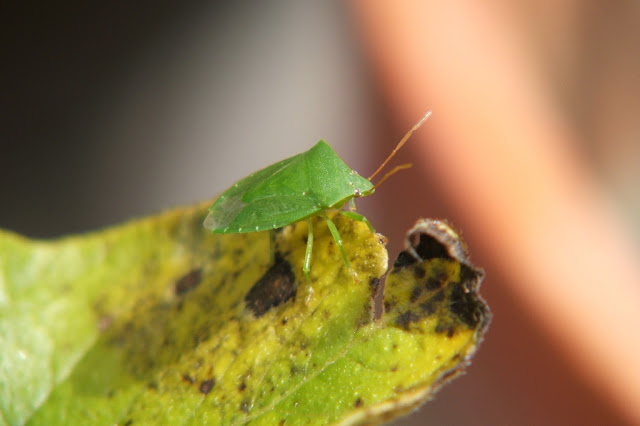
Green Shield bug, Nezara viridula

Green Shield bug  Nezara viridula

Canon 70D
Tamron 90mm f/2.8 SP macro
Godox TT520II @1/32 + Guage macro diffuser
1/250 - f/11 - ISO160


Oct 23, 2024

Crab Spider (Diaea prasina)

 Crab Spider (Diaea prasina)

Canon 70D
Tamron 90mm f/2.8 SP macro
Godox TT520II @1/32 + Guage macro diffuser
1/250 - f/11 - ISO160

Dec 4, 2023

Brushtail Possum (Trichosurus vulpecula)

Brushtail Possum (Trichosurus vulpecula)

The Brushtail possum (Trichosurus vulpecula) is a nocturnal marsupial native to Australia and found in various habitats, including forests, woodlands, and urban areas. It is known for its distinctive bushy tail, which is longer than its body and often used as a fifth limb to aid in climbing trees.

The Brushtail possum has a robust build with dense fur, typically colored gray or brown, providing excellent insulation against cold temperatures. Its fur also helps it blend into its surroundings. The possum has sharp claws and strong limbs, allowing it to excel in arboreal habitats and move swiftly through trees.

Adult Brushtail possums measure around 32 to 58 centimeters in length, excluding the tail, which can measure up to 40 centimeters long. They weigh approximately 1.2 to 4.5 kilograms, with males being larger than females. Their round heads have large ears and dark, shining eyes that aid them during their night-time explorations.

This species primarily feeds on a varied diet of leaves, flowers, fruits, and occasionally insects and eggs. They have adapted well to human settlements and can even raid gardens or garbage bins in search of food. Despite being herbivorous, Brushtail possums possess sharp incisors and molars, allowing them to easily chew through vegetation.

Brushtail possums are mainly active at night, spending their days resting in tree hollows or dreys constructed from twigs, leaves, and other materials. They are solitary animals with territorial behavior, marking their range with scent glands located near their cheeks.

Breeding season for Brushtail possums typically occurs during the colder months between April and September. After a gestation period of just 17-19 days, the female gives birth to a single tiny, underdeveloped offspring called a joey. The joey then crawls into the pouch, where it continues to grow and develop for several months, until it is strong enough to climb onto its mother's back and venture out.

Due to their adaptability and tolerance for various environments, Brushtail possums are considered a common and widespread species across Australia. While they serve as an important part of the ecosystem, they can also be seen as pests when they invade human properties or damage vegetation. Overall, the Brushtail possum is a fascinating and iconic marsupial that represents Australia's unique wildlife diversity.

 1/60 - f/5.6 - ISO400 - built in flash.

Mar 13, 2023

Trail cam in a tiny backyard


 This is a short compilation of clips of a Brushtail Possum that frequents our small back yard most nights.

Dec 28, 2022

Insect Hotel Update

Resin Bee (Megachile ferox)
 
Update from the insect hotel, a Resin Bee (Megachile ferox), had layed her eggs deep in one of drilled holes and was in the process of sealing the entrance when I took this shot.

1/250 - f/7.1 - ISO200 - 50mm + 31mm extension tube.

Jun 29, 2022

False Garden Mantis, (Pseudomantis albofimbriata)

The egg sac of a False Garden Mantis, (Pseudomantis albofimbriata), adhered to the trunk of a young Plum tree.

1/250 - f/16 - ISO400 - macro
 

Feb 6, 2022

Slender Ringtail Damselfly (Austrolestes analis, Fam: Lestidae)

Slender Ringtail Damselfly (Austrolestes analis, Fam: Lestidae)

The Slender Ringtail Damselfly, scientifically known as Austrolestes analis, is a beautiful and fascinating insect belonging to the damselfly family Lestidae. It is characterized by its slender body structure with a length of approximately 3.5 to 4.5 centimeters, making it one of the smaller damselflies.

This species is renowned for its striking and vibrant coloration. Their bodies are predominantly metallic black, accompanied by delicate patterns of vibrant blue or purple on the thorax and abdomen. Adult males of the Slender Ringtail Damselfly generally display more intense colors and may possess bright turquoise or indigo hues, while females exhibit a paler and less vibrant color palette.

The damselfly's compound eyes are large and noticeable, providing excellent vision, aiding in hunting as well as identifying potential predators or mates. They have transparent, elongated wings, giving them the ability to glide effortlessly through the air with incredible agility and precision. Their delicate wings are adorned with intricate, iridescent patterns that sparkles when hit by sunlight.

Found across New South Wales, Queensland, and Victoria in Australia, the Slender Ringtail Damselfly prefers habitats near slow-flowing streams, marshes, and still waters such as ponds or wetlands. They can be seen gracefully perching on vegetation or branches, waiting patiently for their prey to venture within striking distance.

As carnivorous insects, the Slender Ringtail Damselfly feeds on small invertebrates, including tiny insects, smaller damselflies, mosquitoes, and flies. They employ their remarkable agility and superb flying abilities to capture prey mid-air with their strong, grasping forelegs. They are an essential part of the ecosystem, helping to control insect populations.

Breeding behavior in the Slender Ringtail Damselfly is intriguing. Males will establish territories near water bodies and engage in vibrant aerial displays to attract females. During mating, males clasp the females behind their heads using specialized appendages called claspers. Afterward, females lay their eggs underwater, attaching them to plant stems or leaves.

With their captivating appearance and graceful flight, the Slender Ringtail Damselfly has become a favorite subject for insect enthusiasts and photographers alike. However, their populations have experienced decline due to habitat loss and degradation, making them a species of conservation concern. Efforts aimed at protecting their habitats and raising awareness about their significance in the ecosystem are critical for their survival.

1/250 - f/11 - ISO200 - 135mm + 31mm, 21mm, 13mm extension tubes + diffused flash.


Jan 22, 2022

Common Blue Grass Butterfly (Zizina labradus)

Common Blue Grass Butterfly (Zizina labradus)

The Common Blue Grass Butterfly, also known as the Zizina labradus, is a small and delicate butterfly species that can be found in various parts of Europe, North Africa, Asia and Australia. It belongs to the family Lycaenidae and is one of the most widespread and abundant butterflies in its range.

This butterfly species is characterized by its beautiful blue coloration on the upper side of its wings, which gives it its common name. However, the shade of blue can vary from light to a deep and vibrant hue, depending on geographical location and gender. The males typically have a brighter blue color compared to the females, who tend to have a more subdued tone.

The wingspan of the Common Blue Grass Butterfly ranges from 25 to 38 millimeters, making it relatively small in size. Its wings are adorned with intricate patterns of black spots, which provide a striking contrast against the vibrant blue background. The underside of the wings is a pale grayish color with black spots, providing camouflage and protection from predators when the butterfly rests or feeds on flowers.

In terms of behavior, these butterflies are known to be active during sunny and warm weather, typically from spring to late summer. They are often seen flying low to the ground in grassy and meadow habitats, hence their name. The Common Blue Grass Butterfly feeds on nectar from a variety of flowers, particularly those with open shapes, such as thistles and clovers.

The lifecycle of this butterfly follows the typical stages of egg, larva (caterpillar), pupa, and adult. The female lays her eggs on the undersides of leaves, usually near the host plants that will provide food for the caterpillars. The caterpillars have a greenish color with white stripes and feed primarily on legumes, such as clovers and vetches. The pupa stage takes place in a sheltered area, and after a few weeks, the adult butterfly emerges, ready to continue its lifecycle.

Overall, the Common Blue Grass Butterfly is a beautiful and common sight in many grasslands and meadows. Its vibrant blue coloration and graceful flight make it a delightful addition to the natural landscape.

1/100 - f/6.3 - ISO400 - macro


Nov 8, 2021

Beefly, Erstalis tenax

A Beefly, (Erstalis tenax), feeding on nectar from a rose flower.

1/200 - f/5 - ISO64 - macro
 

Nov 5, 2021

Green Shield Bug, Chinavia hilaris

Green Shield Bug (Palomena prasina)

The Green Shield Bug, also known as the Green Stink Bug (Palomena prasina), is a vibrant and distinctive insect belonging to the family Pentatomidae. As its name suggests, it exhibits a vibrant green coloration on its body, which serves as an effective camouflage among vegetation, especially leaves.

These bugs are typically small to medium-sized, measuring around 1.5 centimeters in length, with a shield-shaped, broad body. Their bodies are oval in shape and have a hardened, textured exoskeleton that acts as protection from predators.

One of the most notable features of the Green Shield Bug is its visually striking antennae, consisting of alternating dark and light segments. Additionally, it possesses a pair of large, dark eyes located on either side of its head, enabling it to have a good field of vision.

Green Shield Bugs are commonly found in temperate regions of Europe, Asia, and Africa, where they have adapted to a variety of habitats, including gardens, woodlands, meadows, and agricultural lands. They are known to be particularly attracted to plants such as nettle, ivy, and hawthorn.

These bugs are herbivorous and primarily feed on plant sap by piercing the tissues with their long, needle-like mouthparts. While they are not considered harmful to humans, they can occasionally cause damage to crops and garden plants. However, they also contribute positively to the ecosystem by preying on other insects, such as aphids, caterpillars, and beetle larvae.

Mating occurs during late spring or early summer, and the female Green Shield Bug lays eggs on leaves of host plants, usually in clusters. The eggs are small, barrel-shaped, and have a greenish color, blending well with the surrounding vegetation. Once hatched, the young nymphs resemble the adults but are smaller and lack wings.

Throughout their lifecycle, Green Shield Bugs undergo several molting stages, shedding their exoskeleton and growing larger with each phase. The length of their lifecycle can vary depending on environmental conditions, typically ranging from two to three months.

Overall, the Green Shield Bug is an intriguing insect known for its vibrant green coloration, distinct shield-shaped body, and beneficial role in ecological balance. Its ability to adapt to various habitats and diet preferences makes it an essential component of the natural world around us.

1/550 - f/3 - ISO64 - macro
 

Oct 4, 2021

Spotted Flower Chafer - Neorrhina punctatum

Spotted Flower Chafer (Neorrhina punctatum)

This is the first time I have encountered this species in our garden, the Spotted Flower Chafer, (Neorrhina punctatum). The beetle is pale brown in colour with many large black dots on its thorax and wing covers. Flower chafers feed on nectar and are often found among the petals of flowers, I found this one feeding on some field daisies.

1/150 - f/5.6 - ISO64 - macro


Sep 21, 2021

Common Garden Snail (Cornu aspersa)


Close up of a Common Garden Snail (Cornu aspersum), which was introduced to Australia from Europe. They are edible and commercially raised in Australia and exported to countries such as France where it is eaten as 'escargot'.

1/200 - f/9 - ISO200 - 55mm macro
 

Sep 14, 2021

Painted Lady Butterfly, Vanessa kershawi

Painted Lady (Vanessa kershawi), resting on the lawn in the mid-morning sun.

The Australian Painted Lady butterfly, scientifically known as Vanessa kershawi, is a stunning and vibrant butterfly species native to Australia. Its striking appearance and distinctive wing patterns make it a beloved and recognizable species among entomologists and nature enthusiasts alike.

The wings of the Australian Painted Lady feature a beautiful combination of bright orange, black, and white markings. The forewings exhibit a pattern of black spots on an orange background, which extends into a white bar near the tips. The hindwings, on the other hand, boast intricate black and white patterns that create an eye-catching contrast against the vibrant orange color.

With a wingspan reaching approximately 5-7 centimeters, the Australian Painted Lady is a medium-sized butterfly. When in flight, it gracefully flutters from flower to flower, seeking nectar as its main source of nutrition. The butterfly has a preference for a variety of flowering plants, including native wildflowers, asters, and thistles.

A unique aspect of this butterfly species is its migratory behavior. Australian Painted Lady butterflies undertake impressive annual migrations across vast distances, often traveling from their breeding grounds in the inland areas to the coastal regions. These migrations are thought to be influenced by favorable climate conditions and the availability of food sources.

The Australian Painted Lady butterfly undergoes a complete metamorphosis, starting from an egg that hatches into a caterpillar. The caterpillar exhibits a black body covered in fine spines and feeds on host plants such as Gnaphalium and Helichrysum. After undergoing several molts, the caterpillar forms a pupa or chrysalis, within which the transformation into a fully grown butterfly takes place. The entire life cycle of this butterfly lasts for several weeks.

In addition to its exquisitely beautiful appearance, the Australian Painted Lady butterfly also plays an important ecological role as a pollinator. As it flits from flower to flower sipping nectar, it inadvertently transfers pollen, aiding in the reproduction of various plant species.

Overall, the Australian Painted Lady butterfly is an enchanting and dynamic species that showcases the remarkable wonders of nature. Its vibrant colors, migratory behavior, and ecological significance make it a true treasure of the Australian insect world.

1/2500 - f/5.6 - ISO400 - 135mm macro
 

Sep 13, 2021

Juvenile Orb Weaver Spider

Well, it's Spring time and the spiders are begining to come out. This Orb weaver was resting in the sun on the leaf of a plum tree.

1/640 - f/5.6 - ISO200 - 135mm macro


Sep 3, 2021

Green katydid Nymph, Caedicia simplex

Caedicia simplex Katydids look like grasshoppers and are leaf feeders. This one was perched on the leaf of Dock weed for a few days until the heavy rain started.
 

1/200 - f/9 - ISO200 - diffused flash - macro

Aug 8, 2021

Wolf Spider - Lycosa furcillata


Another shot of a Wolf Spider(Lycosa furcillata), hiding amongst the blades of grass in late winter.

The Wolf spider (Lycosidae) is a fascinating and relatively common arachnid species found throughout Australia. Known for their speed, agility, and fierce hunting abilities, these spiders are considered beneficial to the ecosystem as they help control insect populations.

The Wolf spider derives its name from its hunting strategy, which closely resembles that of a wolf. Rather than creating intricate webs to catch their prey, they rely on their excellent vision and agility to actively hunt and pounce on their victims. Armed with eight long and hairy legs, they can quickly sprint across a variety of terrains, including forest floors, grasslands, and even sandy deserts.

One distinguishing characteristic of the Wolf spider is its unique eye arrangement. They possess eight eyes arranged in three rows. The two forward-facing larger eyes provide exceptional vision, enabling them to spot potential prey or predators from a distance. This keen eyesight also aids them in navigation and helps them locate suitable mates.

With a body length ranging from 1 to 30 millimeters, the appearance of Wolf spiders can vary greatly depending on the specific species. However, most have robust bodies covered in bristle-like hair, enhancing their ability to sense vibrations, temperature changes, and humidity in their surroundings.

Despite their rather intimidating appearance, Wolf spiders are generally harmless to humans. They are non-aggressive and avoid confrontation when possible, but they may bite if they feel threatened or cornered. The venom of the Wolf spider is usually not considered dangerous to humans, causing only localized pain, swelling, and redness.

These spiders are excellent mothers, showing a high level of parental care. After mating, the female carries her egg sac attached to her spinnerets until the spiderlings hatch. Once hatched, the babies ride on the mother's back like a tiny mobile nursery. This behavior protects them from potential predators and ensures their survival during the vulnerable early stages of life.

One common misconception about Wolf spiders is their association with tarantulas. Despite some similarities in appearance, Wolf spiders belong to a different family and are not considered tarantulas. They are solitary creatures, often found alone, except during mating or when a mother is caring for her offspring.

In conclusion, the Wolf spider in Australia is a captivating and often misunderstood creature. Their incredible hunting abilities, unique eye arrangement, and parental care make them an intriguing species to observe in the wild. These spiders play a crucial role in maintaining the balance of Australia's ecosystems by controlling insect populations naturally.

1/200 - f/9 - ISO400

Jun 14, 2021

Common House Spider (Badumna insignis)


 A Common House Spider, (Badumna insignis), guarding the door of the workshop on a cold winters morning.

1/200 - f/9 - ISO200 - macro

May 31, 2021

Marbled Gecko, Christinus marmoratus

Found this little beauty, Marbled Gecko, Christinus marmoratus, under the portable heater this morning. We don't usually see any reptiles this time of year, but it was only 2°C, may be he thought being warm was better than hybernating.

1/200 - f/9 - ISO200 - macro - diffused flash


All images displayed on this website © 2021 Andrew K Waugh. All Rights Reserved.